
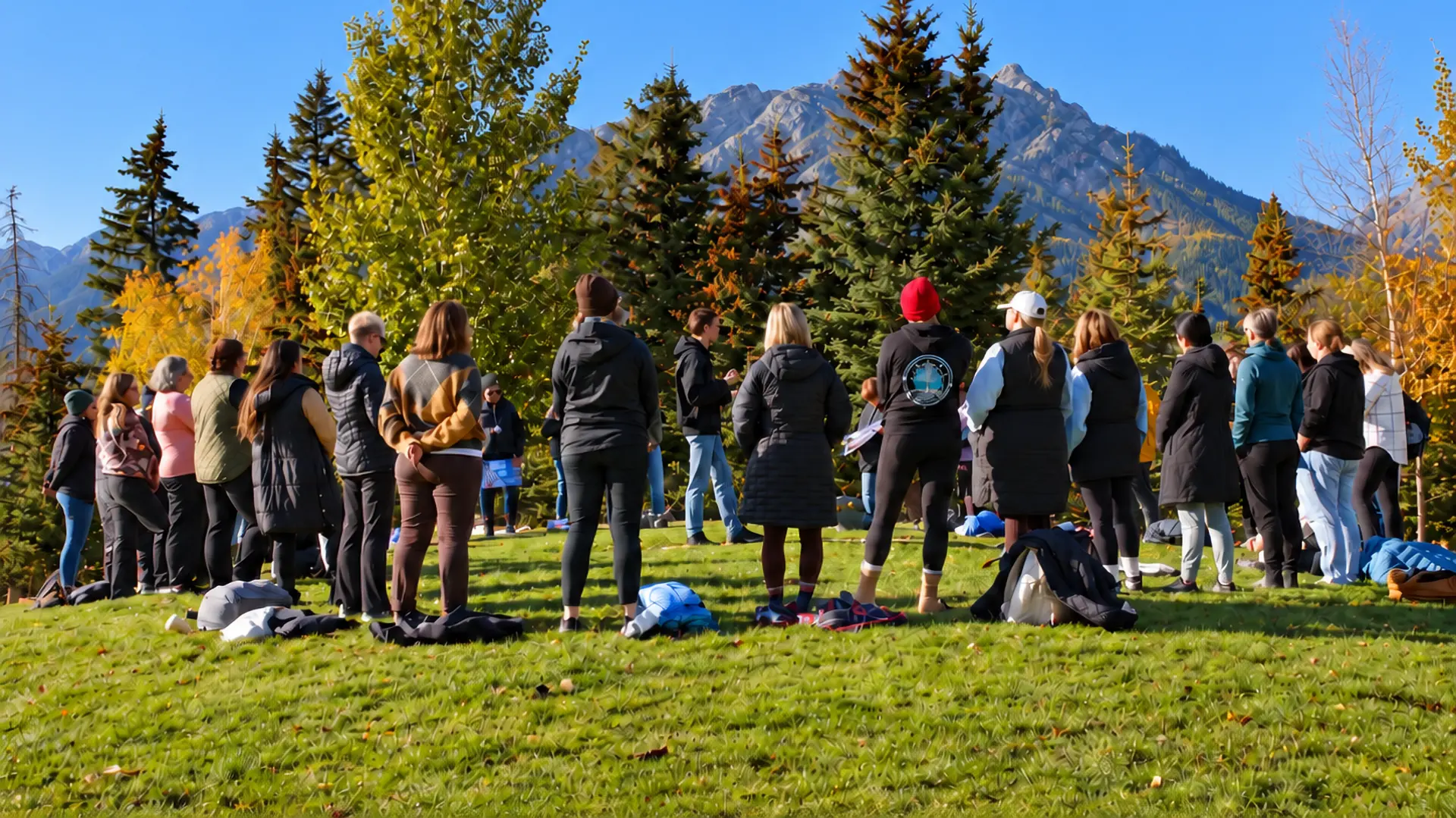
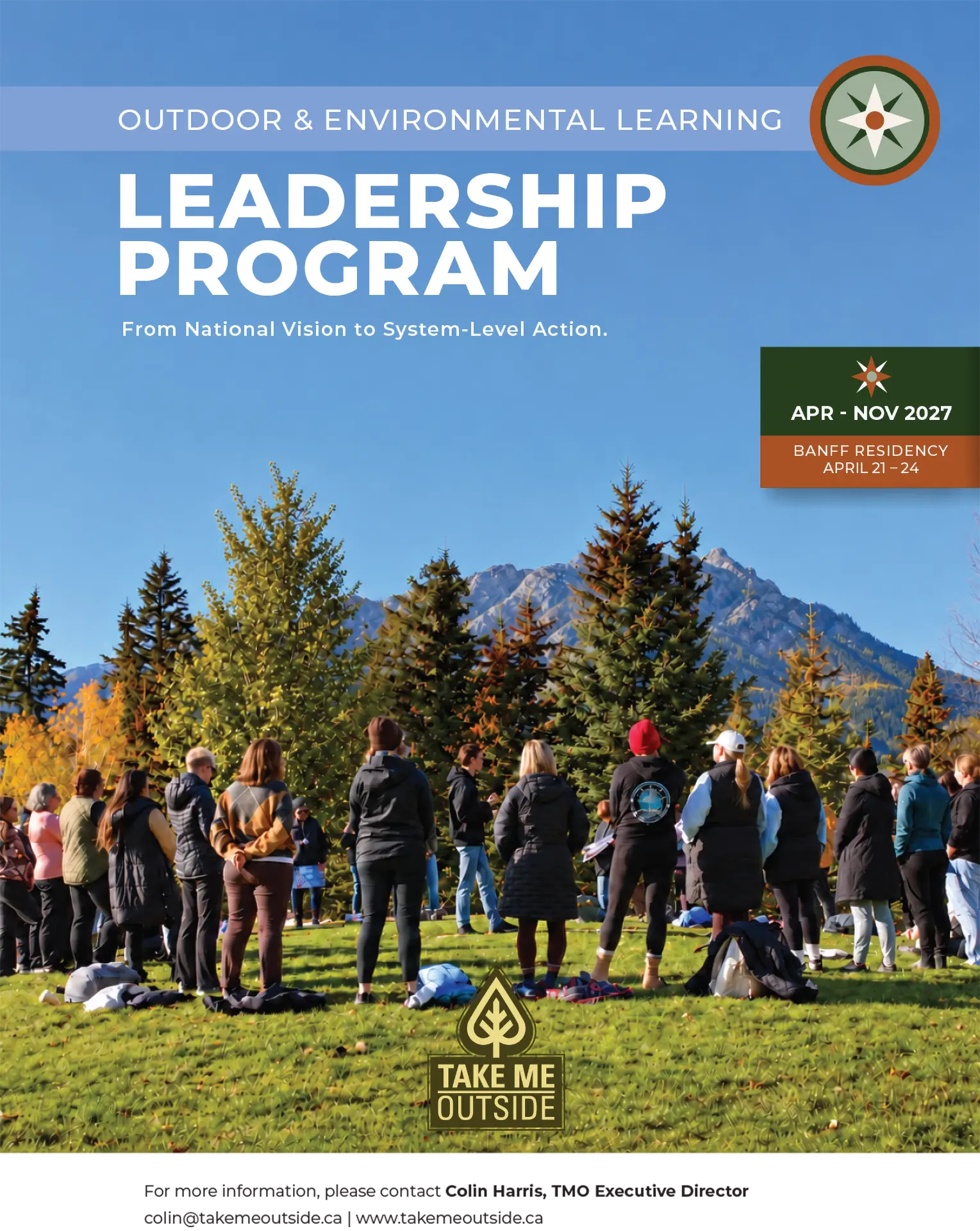
The Outdoor & Environmental Learning Leadership Program is an intensive leadership and implementation experience for senior K–12 system leaders seeking to embed outdoor and environmental learning within the priorities, structures and everyday practices of their school systems.
Grounded in Canada’s National Framework for Environmental Learning (NFEL), the program brings together a national cohort of system leaders for a three-day experience in Banff, followed by six months of supported implementation, mentorship and peer learning. Participating systems will assess their strengths and opportunities across the Framework, identify one or two priorities for focused action, and develop a practical implementation roadmap suited to their own context.
Indigenous knowledge, perspectives and relationships will be integrated throughout the leadership experience. Participants will have opportunities to learn from Indigenous knowledge holders and explore how meaningful partnerships, reconciliation and Indigenous relationships with land and place can inform leadership decisions and system-level change.

A system-level assessment of strengths, gaps and opportunities across the five NFEL focus areas.

1–2 clearly defined implementation priorities aligned with their school system’s context, needs and readiness.

A practical implementation roadmap outlining initial actions, key partners, system levers and next steps.

Stronger leadership capacity to build alignment, navigate barriers and advance systems change.

Six months of supported implementation, including mentorship, cohort learning and shared problem-solving.

Connections to relevant expertise and partners to support implementation within their school system.

Initial indicators of progress to measure implementation, capture learning and inform longer-term decisions.

A national cohort of leaders sharing experiences, insights and approaches to advancing outdoor and environmental learning.
Long Term Vision
Over time, successive cohorts can contribute to a growing body of practical models, evidence and leadership experience that supports outdoor and environmental learning across Canadian school systems.
Research & National Learning
Bringing together school systems from across Canada creates an opportunity to document implementation, identify common barriers and enabling conditions, and share practical learning that can inform future approaches to the National Framework for Environmental Learning.
The program is designed for senior K–12 education leaders positioned to shape system priorities, mobilize resources and lead meaningful implementation, including:
Whether registering individually or as a team, participants will join a national network of education professionals dedicated to advancing systemic change in outdoor learning.
The work that happens after Banff is as important as the residency itself. The program moves beyond traditional professional learning by supporting leaders as they translate ideas and intentions into practical system-level action. The program begins formally with an immersive three-day residency in Banff from April 21-April 24, 2027, followed by a six-month program of mentorship, guided implementation, and peer learning.


Participant outcome:
A preliminary system-level self-assessment across the five NFEL focus areas, identifying strengths, gaps and opportunities to inform focused implementation priorities.

Participant outcome:
A clearer understanding of the leadership conditions, partnerships, resources and system supports needed to advance focused implementation priorities.


Participant outcome:
An initial, focused implementation roadmap identifying 1–2 priorities, key actions, system levers, partners, indicators of progress, and next steps for the six-month supported implementation period.


Mentorship to help navigate leadership decision-making, organizational barriers and implementation challenges

6 Monthly facilitated cohort sessions and 2 individual one-hour coaching sessions focused on progress, shared learning and collaborative problem-solving

Implementation checkpoints tailored to each system’s roadmap, priorities and initial indicators of progress

Small-group problem-solving sessions working through challenges with peers and mentors
Targeted expertise and partnerships connecting leaders with relevant organizations, researchers and practitioners as needs emerge

Peer-to-peer learning and collaboration between schoolsystems pursuing similar implementation priorities
The Leadership Program is led by Take Me Outside in collaboration with experienced K–12 system leaders, including Superintendent Cheryl Lenardon, who brings practical experience advancing outdoor learning within a school system. The program draws on additional expertise from Indigenous education leaders, researchers, national education organizations and outdoor and environmental learning partners, responding to the priorities and implementation challenges emerging within the cohort.
The three-day Banff residency draws on the expertise of Indigenous education leader and author Leona Prince, researcher and author Dr. Megan Zeni, and other experienced educators and facilitators.
Throughout the six-month program, participants will also engage with additional education leaders, researchers, and outdoor and environmental learning organizations, bringing diverse perspectives and expertise to support the priorities and implementation challenges emerging within the cohort.

Cheryl Lenardon is the superintendent of Cariboo Chilcotin School District, located across the spectacular unceded territories of the Secwepemc, Tsilhqot’in, and Dakelh Nations. While the Cariboo is the place she now calls home, Cheryl’s roots stretch from Northern Ontario to the Peace and Kootenay regions of British Columbia.
With more than 30 years in K–12 education, including 15 in district leadership, she has worked alongside educators, students, and communities to make outdoor and place-based learning a vibrant and everyday part of school life. Supporting this work, and watching it grow in two districts, remains one of her greatest professional joys.
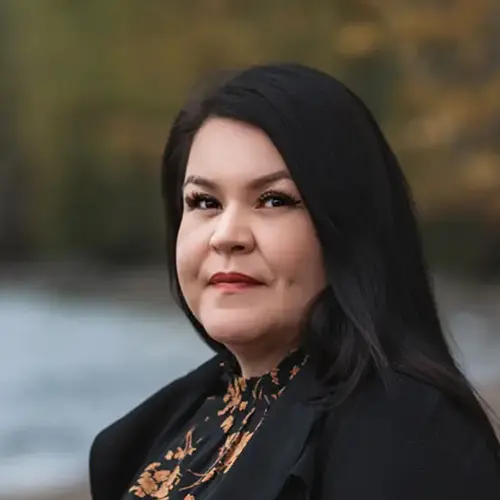
Leona is a Dakelh author, educator, researcher, and entrepreneur from Nak’azdli Whut’en and a proud member of the Lake Babine Nation. She is the author of several best-selling, acclaimed children’s books and is currently completing a Doctor of Education at UBC Okanagan, where her research focuses on Indigenous family engagement and educational transformation. As an experienced school system leader, Leona works nationally with Indigenous Nations, school districts, and organizations to advance Land-based learning, reconciliation, and Indigenous student success. Above all, Leona believes that education is an act of relationship. Whether she is writing books, conducting research, teaching, speaking, or working on the land, her goal remains the same: to help carry the voices of those who came before us and create a better path for those yet to come.

Dr. Megan Zeni earned a PhD in Curriculum Studies from the University of British Columbia and is recognized as a trusted voice for system leaders interested in building capacity for effective and sustainable implementation of outdoor play and learning locally, nationally, and internationally. Dr. Zeni offers scholarship and evidence grounded in the practical realities of day-to-day early learning professionals and school teachers. She brings 3 decades of professional K-7 teaching experience in public school classrooms, outdoor classrooms, and work with pre-service and in-service professionals to her consultation services and research collaborations. Learn more about the importance of risky play in schools and follow her work at meganzeni.com
Claire Guy serves as Leadership Advisor for the Outdoor & Environmental Learning Leadership Program, coordinating program development and delivery in collaboration with Take Me Outside and program faculty.
For questions about the program, please contact Claire at claire@takemeoutside.ca.
Take Me Outside invites K–12 school system leaders from across Canada to participate in a leadership experience designed to advance outdoor and environmental learning within their districts and boards.
Beginning with an immersive residency in Banff, Alberta, the program brings together education leaders for collaborative learning, reflection, and planning, followed by ongoing coaching, mentorship, and peer learning to support implementation within their respective school systems.
The program begins with an evening arrival and welcome on April 21, followed by three days of immersive learning at the Banff Centre, April 22–24.
Participants may register individually or as part of a district or board team of up to four people. While individual participation is welcome, we encourage leaders to consider attending with colleagues to strengthen collaboration, shared leadership, and opportunities for system-level change.
Take Me Outside is actively exploring funding opportunities to help make this leadership program more accessible to school districts and boards across Canada. We recognize that financial capacity varies across school systems and are committed to exploring opportunities that support broader participation.
If your district or board is interested in participating but would require financial assistance, please contact Claire Guy at claire@takemeoutside.ca to discuss potential subsidy opportunities.
We invite you to register individually or with colleagues from your district or board.
Please complete the registration form below. If registering as a team, one designated representative can complete the registration for all participants.
Registration fees may be paid by credit card or through an invoice issued to your school district or board.