
We hope to see you in future years. Thank you for your support! Click here to register for TMO Day.
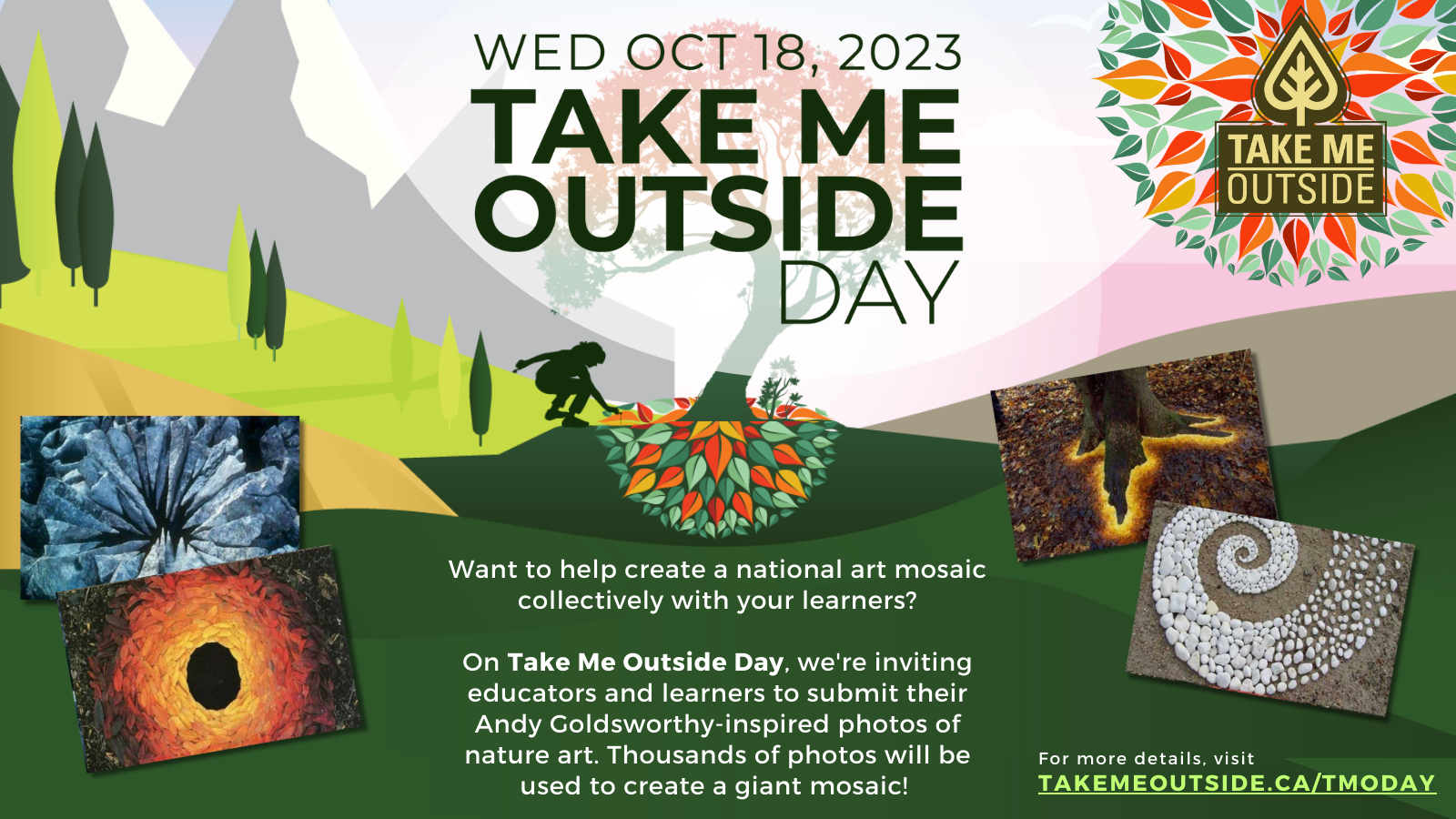
This is your helpful guide to engaging outdoor learning resources to make the most of Take Me Outside Day 2023 with your learners!
All provided free of charge, we have activities under each of our three central themes: Indigenous Perspectives & Ways of Knowing, Health & Wellbeing, and Climate Change & Environmental Education – plus, scroll down to learn more about nature art and how you can get involved on #TakeMeOutsideDay on Oct 18th! If you’re not already registered, click here to sign up for TMO Day now!
Enjoy these for Take Me Outside Day/Week, or any other day of the year! Looking for more? Check out our searchable resource directory, or our suggested resource for Learning Challenge participants.

Grade: 4-12
Subjects: Social Studies, Geography, Language, Health
Teaching Strategies: Movement based learning, Critical thinking, Indigenous perspectives
Connect with a local Friendship Centre, First Nations Band Office, Métis Community Council, or Inuit group to establish a friendship and connection with an Elder or indigenous knowledge keeper who may be able to share a written, recorded, or in-person version of their local creation story. After the creation story has been shared with students, engage in enriching conversations about how students connect with their local lands, and reflect on how many indigenous peoples have always lived WITH the land versus off the land, and continue to do so today. Ideally with this new indigenous mentor and friend, take students to a forest, trail, or greenspace and have them locate different natural items, encouraging them to reflect on how they or their ancestors connect with this natural being. Continue learning with a sharing circle or the ceremonial choosing of the knowledge keepers choice. View this resource on Getting to Know the Land from PHE Canada here!

Grade: 4-7
Subjects: Health, Social Studies, Geography, Language
Teaching Strategies: Critical thinking, Indigenous perspectives and knowledge
This activity can be used in conjunction with Patterns, Plants and Playgrounds also from Evergreen. These activities all focus on the relationship between people and plants to engage students in learning about the native plants of the coastal region of British Columbia and the traditions associated with local First Nations cultures. Get your kids excited with these activities that range from making a medicine wheel to identifying plants in Halkomelem, a West Coast First Nations language. It was written by educator Illene Pevec and piloted at Grandview/U’uqinak’uuh Elementary School in Vancouver, BC. Check out this learning module from Evergreen on Ethnobotany here!

Grade: K-12
Subjects: Social Studies, Science, Language, Art
Teaching Strategies: Critical thinking, Indigenous perspectives, Outdoor Learning, Citizen Science
This Átl’ḵa7tsem/Txwnéwu7ts/ Howe Sound Education Kit from Ocean Wise provides incredibly detailed and organized lessons, complete with an educator guidebook and corresponding student workbook. Átl’ḵa7tsem/Txwnéwu7ts/ Howe Sound is a coastal fjord ecosystem in the Salish Sea. It is a vital area to local First Nation communities, providing natural resources that allowed Indigenous peoples to thrive for generations before colonization. Following colonization and years of destructive human activity, such as industrial and coastal development, efforts are currently underway by government, industry groups, and local communities to transition the Sound’s marine ecosystem from crisis to recovery. Indigenous communities, in particular, are working hard to restore life and traditional practices for generations to come. Using Átl’ḵa7tsem/ Txwnéwu7ts/ Howe Sound as a case study, students can recognize how ecosystems, species, human impact, and climate change are interconnected. This work is essential for students to make informed decisions as the future stewards of our planet.
Grade: K-12 (educator education for all grades of teachers)
Subjects: Social Studies, Geography, Language, Health
Teaching Strategies: Inclusion, Culturally sensitive and conscious ed, Indigenous perspectives
Forest Schooled educators, Landere Naisbitt & Caylin Gans, reflect on the importance of acknowledging Indigenous peoples’ presences, histories, and worldviews, which encompass a deep relationship to the land, and bridge the difficult but necessary conversation that if we aren’t inclusive of these worldviews and cultures, we are perpetuating colonialism and systems of oppression even within seemingly innocent nature-based, outdoor education programs.
This living document provides educators with terms, tips for starting practices for acknowledging indigenous presences, histories and perspectives and how they facilitate learning sessions with sensitive and inclusive practices.
Click here for this important document: Facing Colonization in our Work with the Land & Building our Understanding of Indigenous Perspectives.
Grade: All Grades
Subjects: ANY
Teaching Strategies: Critical thinking, Place based learning, Collaborative learning
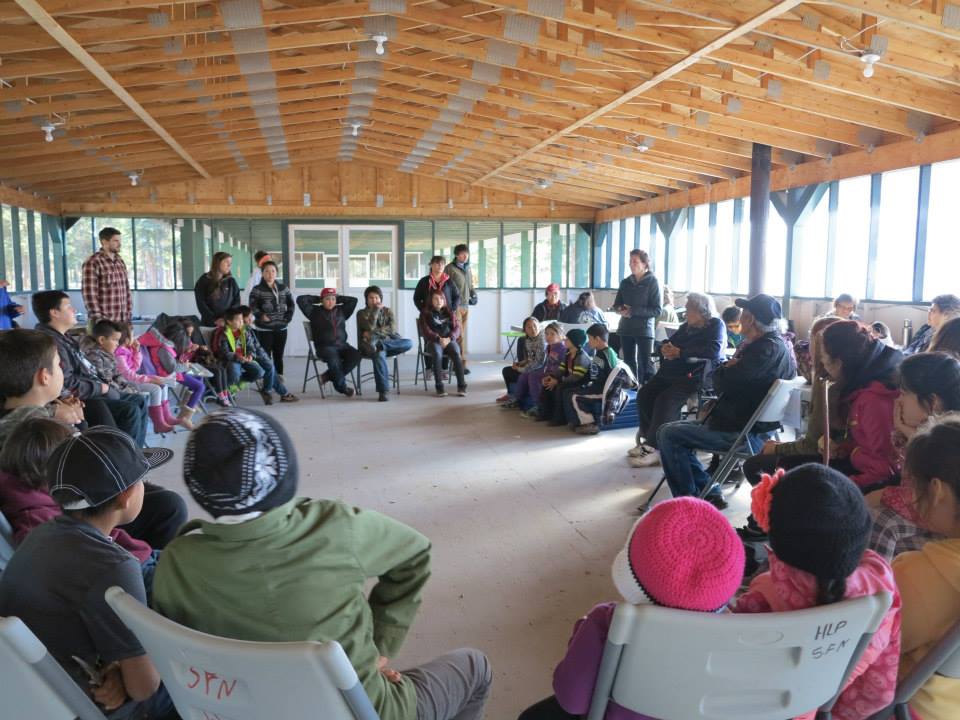
Choose an object to facilitate the listening circle, such as a small stone or a pine cone. The object is passed around from person to person, allowing only the person holding the object to speak. This enables all those present to be heard, especially those who may be shy. Sitting in silence for a few moments before the object is passed is also permitted. Consensus can focus on the object to move along, to assure that the “long winded” don’t dominate the discussion.
Please note: This activity is inspired by a “talking circle” which refers to a spiritual practice used in many Indigenous nations involving specific ceremonies, invitations to ancestors, and regional differences between nations. With the guidance of an elder or knowledge keeper, a talking stick circle could be used, in replacement of this less formal Listening Circle exercise.

Grade: All Grades
Subjects: English/Language arts, Geography, Religion, Social Studies, History
Teaching Strategies: Place based learning, collaborative learning, critical thinking
This activity can be an individual task or a group/collaborative activity. Students can create their own land acknowledgment for their personal classroom. Encourage students to discuss and research Indigenous groups of Canada and their historical residences on this land. For elementary students, this may take the form of a poem or song. Give students time to reflect on their own personal relationship to the land.
For secondary students, consider asking questions like: What should a land acknowledgment say? Who should a land acknowledgment be for? What is the purpose of acknowledging the land?
Once students create their own land acknowledgment, allow them to write down pieces of their own onto a collaborative class document (on the chalkboard, chart paper, google docs, etc). Co-constructing a land acknowledgment can be a powerful tool in continuing to learn more about Indigenous groups and their importance to Canadian culture.
For more information, check out native-land.ca
Authored by Carolynne Crawley
Grades: All Grades
Subjects: Interdisciplinary
Teaching Strategy: Reflective Practice, Metacognition, Outdoor Learning
This activity should be guided while outdoors preferably in a garden, park, ravine, or any other
“green space.” It creates an opportunity for students to be in the present moment and tuned
into their surroundings through their senses. Invite students to get comfortable preferably
sitting. They may close their eyes if they feel comfortable to do so. Suggest they take a few
slow deep breaths. Then guide them slowly through each of their senses while giving them 30
seconds to notice what they are experiencing before moving onto the next sense. For example
asking the students “Bring your attention to your sense of smell. Perhaps take some long deep
breaths to notice any scents in the air.” “Notice the sounds surrounding you in this moment.
Notice the sounds closest to you and farthest from you” End the guided sensory experience
with their sense of sight by inviting them to open their eyes and notice their surrounding. Create an opportunity for sharing.
Authored by Carolynne Crawley
Grades: All Grades
Subjects: Geography, Science, Health
Teaching Strategy: Outdoor Learning, Reflective Practices, Active learning
This activity should be guided while outdoors preferably in a garden, park, ravine, or any other
“green space.” Invite the students to move very slowly by setting the pace for them. Suggest
they move along a trail, walk way, or move around in the area and notice who is moving on the
land. Perhaps doing this in silence and another time not in silence while moving quickly. That
way students can learn that moving slowly in silence creates opportunity to notice more and
lessen the level of disturbance upon wildlife. Engage in this activity for five to twenty minutes.
Create an opportunity for students to share what they noticed as a group or in partners.
Authored by Carolynne Crawley
Grades: Grades K-6
Subjects: All Subjects
Teaching Strategy: Active learning, Reflective Learning
Find eight to twelve objects from nature such as feathers, leaves, stones, shells, seeds, etc.
Place them onto a table or floor with a cloth covering the objects. Invite the students to gather
around the table and remove the cloth to show them the items. The objects are to remain on
the table/floor. Give students up to 30 seconds to memorize the objects then cover them up.
Ask the students questions for memory recall such as How many objects are on the table?
Name the objects. Once a student names an object ask students specific questions to see if
they can recall any details about that object such as the shape, colour(s), and size. Once
students can no longer answer any of the questions about any of the objects remove the cloth
again for up to 15 seconds to create opportunity for students to retain more detailed information.
Once again ask students questions after covering up the objects. This can be adapted for any
subject. Instead of objects it could be words, numbers, or shapes that are used for memory
recall.
Grade: All Grades
Subjects: Phys Ed, Language, Social Studies
Teaching Strategies: Critical thinking, Place based learning, Collaborative learning
Check out this resource from Ever Active! Your learners will love exploring local natural spaces and sharing their gratitude writing letters to the land.
Grade: 6-12
Subjects: Science, Language
Teaching Strategies: Citizen science, experiential learning
This detailed Pollinator Resource Package from Green Teacher shares great readings and also 3 awesome lessons that engage students on menu planning with pollinated food, learning about squash bee and human dependance, and bumble bee observations. Have fun getting your students outside and connected with their local BEEautiful pollinators!

Grade: K-4
Subjects: Science, Art, Phys Ed
Teaching Strategies: Place based learning, artistic approaches to learning
What different feet have walked on this land? Identify as a class the names of as many local animals/insects as possible. Students can first discuss, then begin to imagine and then draw their different prints. Next they might look for evidence of paw/hoof/foot shapes in the playground. You might assign different animals/insects for students to research. What is the shape of these animals’ paws/feet? Students can draw these shapes on cards and then work as a class to create classifications for them.
Explore more primary Imaginative Ecological Learning Activities here!

Grade: K-2
Subjects:Science, English Language Arts, Visual Arts
Teaching Strategies: Hands-on Learning, Personal Connections, Student Voice
Every organism needs food, water, shelter, and space. A place that meets all these needs is called a habitat. In this Backyard Safari Project Learning Tree resource, students will explore a nearby habitat—their backyard, schoolyard, or other outdoor setting—to look for signs of animals living there.
Grade: 3-5
Subjects:Science, English Language Arts
Teaching Strategies: Cooperative learning, Investigating, Hands on learning
Students explore the amazing diversity of life on Earth and discover how plants and animals are adapted for survival. This activity helps students understand why there are so many different species and teaches them the value of biodiversity. Click here for the Charting Biodiversity resource from Project Learning Tree!
Grade: 6-8
Subjects:Science, English Language Arts, Math
Teaching Strategies: Cooperative Learning, Literacy Skills, Personal Connections
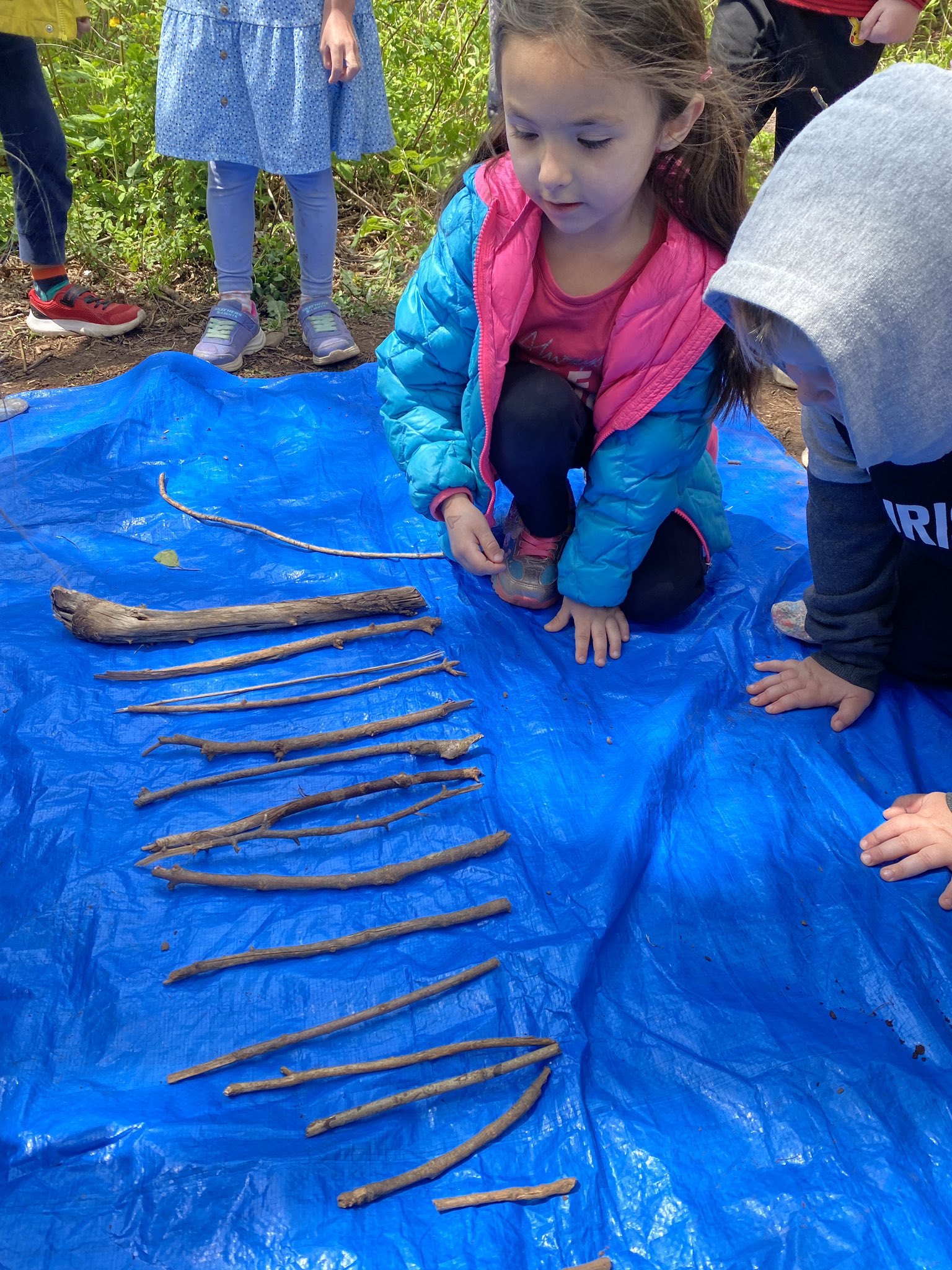
Students conduct a field study of three different environments as they focus on sunlight, soil moisture, temperature, wind, water flow, plants, and animals in each environment. By comparing different environments, students will learn how non-living (abiotic) elements influence living (biotic) elements in an ecosystem. Click here for the Field, Forest and Stream resource from Project Learning Tree!
Grade: 7-12
Subjects:Science, Environmental Science, Geography, Language, Civics
Teaching Strategies: Experiential Education, Investigating, Place based learning
In this Case Study and Learning Activity here from the River Institute, students will learn about the characteristics of a Change Maker by exploring the actions of Christina Enright, a monarch butterfly advocate. After learning about Christina, students step into the shoes of a Change Maker by finding and researching a chosen organism from their school yard. Students will demonstrate their learning by sharing their findings about their chosen organism with their peers and providing an inspiring take-home message.
Grade: 9-12
Subjects: Geography, Civics
Teaching Strategies: Critical thinking, Ecological lens, Outdoor Learning, Citizen Science
Using the concept of the ecological footprint, students do the groundwork for a school ground greening project (either real or hypothetical). Students investigate local soil conditions, weather patterns, topography and vegetation, and propose a greening project that would reduce your school’s ecological footprint. Have fun challenging your school with Evergreen’s Approach to Ecological Restoration resource!
Also check the Educator Resource Hub at Evergreen; specifically The “My Climate Toolkit” and “My Nature Arts Activity Book” !
Grade: K-4
Subjects: Math, Language, Art
Teaching Strategies: Place based learning, Collaborative learning
Check out this resource from Ever Active! You will have fun outside with your learners finding colours in nature and doing journaling or math graphing activities afterwards!
Grade: 5-8
Subjects: Science, Language, Art
Teaching Strategies: Experiential research, Place based learning
Change of context! Enlist students as “urban naturalists” who have been hired to teach people in their human community about the animals and insects also inhabiting the place. They will need show what they know about a local species. So, students will adopt a species and prepare to indicate what is unique about the animal/insect.
Explore more general K-12 Imaginative Ecological Learning Activities here!

Grade: K-6
Subjects: Science, Language, Art, Phys Ed
Teaching Strategies: Experiential learning, Place based learning
In this activity from Earth Rangers, storytelling helps spur Eco-Action by showing students that it is possible to make a difference. After identifying what is needed to drive change and the skills they have that can help, the students will begin to contribute to positive change by sharing messages of hope with others. An Earth Rangers research study about Eco-Anxiety in kids and their parents identified 5 E’s to drive eco-action: empathy, education, environmental stewardship, excitement, and empowerment. Sharing stories of change is one way of applying these 5 E’s.
Click here for this resource on Inspiring Eco-Action through Storytelling and find more great outdoor learning resources at the Earth Rangers Homeroom site.
Grade: K-6
Subjects: Drama, Language, Art
Teaching Strategies: Place based learning, experiential, hands on learning
Check out this Nature Charades resource from Ever Active! Your learners will love getting to create their own nature charades cards and play this game with their classmates!
Grade: 9-12
Subjects: Geography, Language, Civics
Teaching Strategies: Critical thinking, outdoor learning, place based learning
Spend time exploring the idea of mapping in one block beyond school grounds. Begin by creating quadrants around the school for different groups of students—as a final activity, maps of each quadrant can be layered and combined.
Explore more secondary Imaginative Ecological Learning Activities here!

Grade: K-12
Subjects: Science, Language, Art, Phys Ed
Teaching Strategies: Experiential learning, Place based learning
This School Garden Basics resources archive offers tips for creating and sustaining your school garden, how to build a bug hotel, how to plant butterfly and rainbow gardens and more. Support your school’s greening movement with these great resources from Megan Zeni.
Grade: 7-12
Subjects: Science and Geography
Teaching Strategies: Active learning, Reflective Learning
Ask the participants to stand in a circle. Give the end of the string to the participant that answers the first question: Where does all the energy in the world come from? Whoever answers “the sun“, gets the ball of wool, holds onto it and hands the ball to the person that answers the question.
What makes all its food from the light of the sun? Whoever answers plants,(or any specific plant) gets the ball of wool. What eats flowers, grass etc? When someone mentions an animal, then you hand them a piece of wool – essentially linking them to each other. Try and take answers from people on either ends to get the wool overlapping and create a good web effect. Then ask what eats the animal mentioned and continue on asking questions to create a description of a working
ecosystem – Now you have an ecology web! Next use a realistic example to illustrate the knock on impacts of removing one part of the ecosystem. For example, a school group came to this field for a visit and picked all the wild flowers. Anyone who is a flower must sit on the ground and bring their string with them. Anyone who feels a pull on this string
must also sit down because that means this is the food they eat so they will not survive. Eventually everyone should be sitting on the ground.
Processing questions:
• How can humans negatively affect the ecosystem?
• Are there things we can change today to minimize our impact?
• Is there anything happening locally that is impacting the ecosystem?
Tips:
• Hand out cards with animals and plants already printed.
• Get the group to think of things happening locally that impact the ecosystem.
For more resources concerning environmental education, visit leavenotracecanada.ca
Grade: 4-8
Subjects: Science and Geography
Teaching Strategies: Active learning, Reflective Learning
Lay seven cards on the ground in front of the group with a different principle on each. Start reading out statements. Find the 7 principles here.
Have the groups guess the correct principle by moving to and standing beside the principle they feel the statement relates most closely to. Continue until you feel the group have a greater under-standing and awareness of the Leave No Trace principles.
Processing Questions
• Was it always clear which principle the statements related to?
• Did certain statements apply to a number of principles?
• Can participants think of their own statements that could apply to Leave no Trace?
• Are any of the principles more relevant to this group and locality?
• Were the group surprised by any of the statements?
For more resources concerning environmental education, visit leavenotracecanada.ca
Grade: 7-12
Subjects: English/Language arts, Geography, Phys. Ed, Science
Teaching Strategies: Constructive Learning, Outdoor Learning, 21st Century Learning
Have students bring their personal devices such as a cell phone with them on a walk around school grounds or the community. Instruct students to take pictures of anything that strikes them in a positive or negative way, through the lens of our relationship with nature.
If bringing student devices is not possible, bring your own device and ask students to tell you what to take pictures of.
Coming back to class, deconstruct these photos. Allow students to reflect on why this photo struck them, and how it connects to our relationship with nature.
Encourage students to study the science behind the photo (ex. If a photo of litter was taken, students may want to research how pollution effects the environment, the rates of different kinds of pollution, etc)
Have students post their photo on a collective platform, such as Google Jam-board. Begin a discussion looking at all the photos that the students had taken on their walk, and reflect on our relationship with nature (both positive and negative reflections).
Alternatively, you can print out each photo and set up different stations around the class and construct an “art show” view of each photo, were students visit each station and discuss the photo with the photographer.

Grades: ANY
Subjects: Interdisciplinary
Teaching Strategies: Outdoor Learning
Take your students outside. Bring writing materials like a piece of paper or journal and a pencil. Have students first LOOK around them and record what they see on their piece of paper. This could be done through a lens of any subject (i.e. what type of biodiversity do you see? What type of physical landscape do you see?). Visit this place frequently (over the course of a week or longer) so students can keep track of their recordings and measure any differences of that outdoor space. At the end of the week, have students compare their findings and asked what they recorded. Begin a class discussion with their findings. to see this activity in more detail!
Save it for later! Winter focused nature art:
Grade: K-12
Subjects: Phys Ed, Health, Geography, Language
Teaching Strategies: Movement based learning, Critical thinking
Provide students with the list of natural items they can find and photograph on a hike and enjoy connecting to your local environment while engaging in fun community based exercise! For this Scavenger Hike resource from PHE Canada click here!
Grade: K-12
Subjects: Science, Health, Geography, Language
Teaching Strategies: Movement based learning, Place based education
Looking for ways to connect your students to their food and making a local, healthy impact on their community? This resource, a joint production of Lifecycles and Evergreen, is an experiential-learning tool focused on food gardening. Lessons are grouped into seasons to help support educators in making the most of learning opportunities in the garden throughout the school year. Designed for schools in BC, the lessons can be easily applied to school gardens across the country.
Check this great resource out from Evergreen for School Garden Activities!

Grade: K-12
Subjects: Science, Health, Art
Teaching Strategies: Place based education, experiential learning, artistic approach to ed
Fill your cup by creating and giving a natural gift to a loved one! Follow Megan Zeni’s steps to creating a Bird Seed Love Heart!
Grade: All Grades
Subjects: English/Language arts, Geography,Math, Phys Ed, Science
Teaching Strategies: Outdoor learning, Metacognition
This activity can take the form of 3 separate stages:
Pre Activity: Encourage students to reflect on spending time outdoors and getting active. What do students enjoy being outdoors? Discuss elements of physical and health literacy. Include a small physical warm up. This can include stretching, jogging on the spot. Students can measure their heart rate during the warm up and compare it with their results post hike.
During the Hike: Encourage students to be completely silent during the hike. Students should be aware of their senses. Ask students to listen, smell, touch, and see nature. Stop for a break if necessary.
Post Activity: Allow students to measure their heart rate, and compare results from the warm up. Use interdisciplinary teaching by asking them questions such as: What math equation gave them their heart rate measurement? What direction did we walk in? What animals did you notice? What were they doing? Ask students to jot down and reflect on their experience of the silent hike. They can also draw their experience, if preferred.
Grades: 1-3
Subjects: Gym, Interdisciplinary
Teaching Strategies: Outdoor learning, Active learning, Reflective learning, Constructive learning
Help the environment while students practice their balance and coordination skills by picking up trash! This two- in -one activity encourages the development of fine motors skills and physical fitness for younger students. These skills transfer to sports and activities that involve dynamic balance and coordination.
Ensure that students pick up safe items by providing them with a graphic chart on what to pick up (i.e wrappers, water bottles).
This activity can be paired with a post discussion or personal reflection on recycling and caring for the environment, as it relates to relevant curricula.
For other variations on this activity, visit activeforlife.com
Grades: K-6
Subjects: Interdisciplinary
Teaching Strategies: Communicative Practice, Reflective Learning, Metacognition
Can you [ear] me? This activity focuses on mental health awareness, specifically eco-anxiety. By encouraging students to discuss their feelings on the future of our environment, the hope is eliminate feelings of anxiety.
Have fun with this activity by encouraging students to wear animal ears when they feel a need to talk or discuss concepts that make them worries or anxious.
Students can make the ears of any animal of their choosing! Find the animal ear template, here.
For more resources on eco-anxiety and other activities focused on the environment check out The Earths Rangers Podcast for elementary students!
For secondary students, check out Earth Ranger’s Podcast “The Big Melt” !
Grade: All Grades
Subjects: English/Language arts, Geography, Phys. Ed, Science
Teaching Strategies: Reflective Learning, Outdoor Learning
Take your students outside, and encourage them to sit in a spot that appeals to them. The idea of this activity is to revisit the same spot, and observe any changes to the area. Have students reflect on Take Me Outside week and everything that transpired! To enhance this activity, try journaling in the sit spot! See below for more more resources:
Grade: 4-12
Subjects: English/Language arts, Geography, Phys. Ed, Science
Teaching Strategies: Reflective Learning, Outdoor Learning
Encourage students to journal and jot down their experiences in nature, in the form of past, present, and what they hope their experiences will be like in the future. Have students bring out a notebook, piece of paper, or allow them to take notes on their cell phones for older grades.
Students can also reflect on the events that transpired for Take Me Outside Week! Another idea is to encourage students to jot down their observations in nature using the 4 senses: sight, touch, smell, and hear.

Educators
Expand your reflections and new knowledge through reading articles by Green Teacher! And for access to a free offer of up to two special themed issues of Green Teacher Magazine, click here.